2026-10-07 ·
Seamless Gutter Installation in NJ: Sizes, Materials and What Drives the Price
It rains hard on a July afternoon and the gutters spill over the front edge like a waterfall. Or the seams drip a line down the siding. Or one corner has sagged and the whole run is pulling away from the fascia. Or you walk out after a storm and find water pooled against the foundation, right where the downspout is supposed to be carrying it off. Any of those is a sign the gutter system is not keeping up with the roof above it.
Before anything else, stay off the ladder if the gutters are heavy with water or the fascia looks soft. Photograph the damage, especially if a storm caused it and you may file an insurance claim, and note where the water goes when it rains. That last detail helps a roofer more than most people expect.
What "Seamless" Means
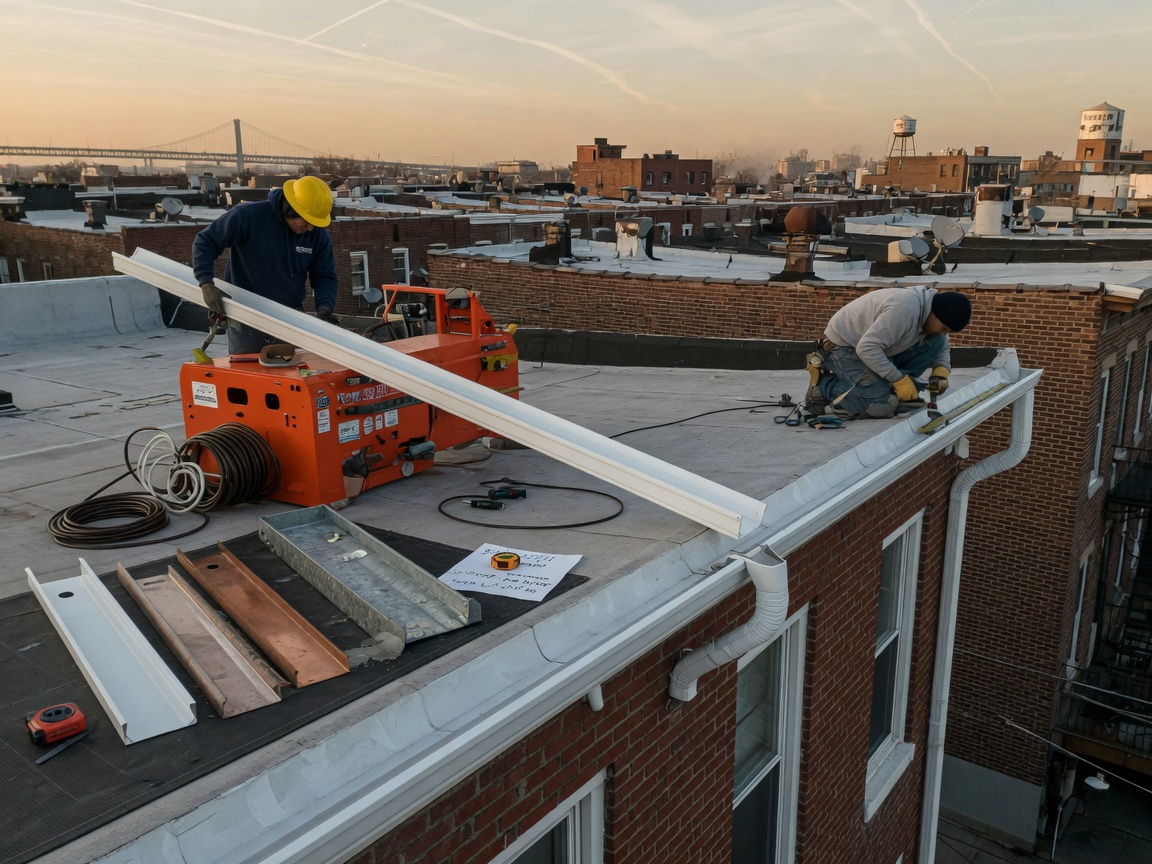
Seamless gutters are formed on site from a coil of aluminum, cut to the exact length of each run. The only joints are at the corners and outlets. Sectional gutters, by contrast, are joined every 10 or 20 feet, and every one of those seams is a place for a leak to start as the sealant ages through New Jersey's freeze-thaw winters. Ice that builds up in a sectional run also pries at the joints, which is one reason old gutters start to sag.
5-Inch or 6-Inch Gutters?
Most single-story New Jersey homes are well served by 5-inch K-style gutters with 2x3-inch downspouts. Larger 6-inch gutters with 3x4-inch downspouts make sense when the roof is large or steep, when long runs feed a single downspout, or when a two-story roof drains onto a lower roof before reaching the gutter. If your current gutters overflow during summer downpours even when they are clean, they are probably too small. Many older homes in North and Central Jersey still have narrow original gutters that were never sized for the roof above them.
A bigger gutter only helps if the water has somewhere to go. A 6-inch trough feeding one small downspout will still back up, so the gutter and downspout sizes should be chosen together.
Downspout Placement and Where the Water Goes
Downspouts are easy to treat as an afterthought, and they are where many gutter problems start. A long run with a single outlet at one end carries more water than that outlet can handle in a heavy storm. Adding a downspout, or moving it toward the middle of a long run, often cures overflow that new gutters alone would not.
Placement matters just as much at the bottom. Water that drops right beside the foundation can soak the soil, seep into a basement or crawl space, and wash out landscaping. Extensions or splash blocks should carry it several feet away from the house and toward ground that slopes away. Avoid pointing a downspout at a neighbor's yard, a walkway that freezes in winter, or a driveway edge where ice would form. Where a downspout lands on a lower roof, it should discharge into a gutter or a short run of pipe, not straight onto the shingles, which wears them out early.
Materials
- Aluminum: the common choice for seamless gutters. It does not rust, comes in baked-on colors that match common trim and siding, and is easy to form on site.
- Copper: long-lasting and attractive as it weathers. It is a premium material and is usually chosen for historic or high-end homes.
- Galvanized steel: heavy and prone to rust over time; rarely used for new residential gutters today.
What Moves the Cost
- Gutter size (6-inch costs more than 5-inch)
- Number of stories and how hard the roof edge is to reach
- Number and length of downspouts, and how far they must be extended
- Fascia board replacement where the existing wood has rotted
- Adding gutter guards at the same time
Install Gutters With a New Roof
If a roof replacement is coming up, that is a sensible moment to replace the gutters too. With the old roof off, new drip edge can be fitted to lap into the gutter and damaged fascia can be replaced before the gutters are hung. See what drives roof replacement cost in New Jersey.
To have your gutters and roof edge looked at together, call (877) 298-2340. We connect your call with a local roofing contractor who can look at the gutters and roof edge and put an estimate in writing. You can also read more about gutter installation.