2026-10-07 ·
Roof Replacement Cost in NJ: What Drives the Price for New Jersey Homeowners
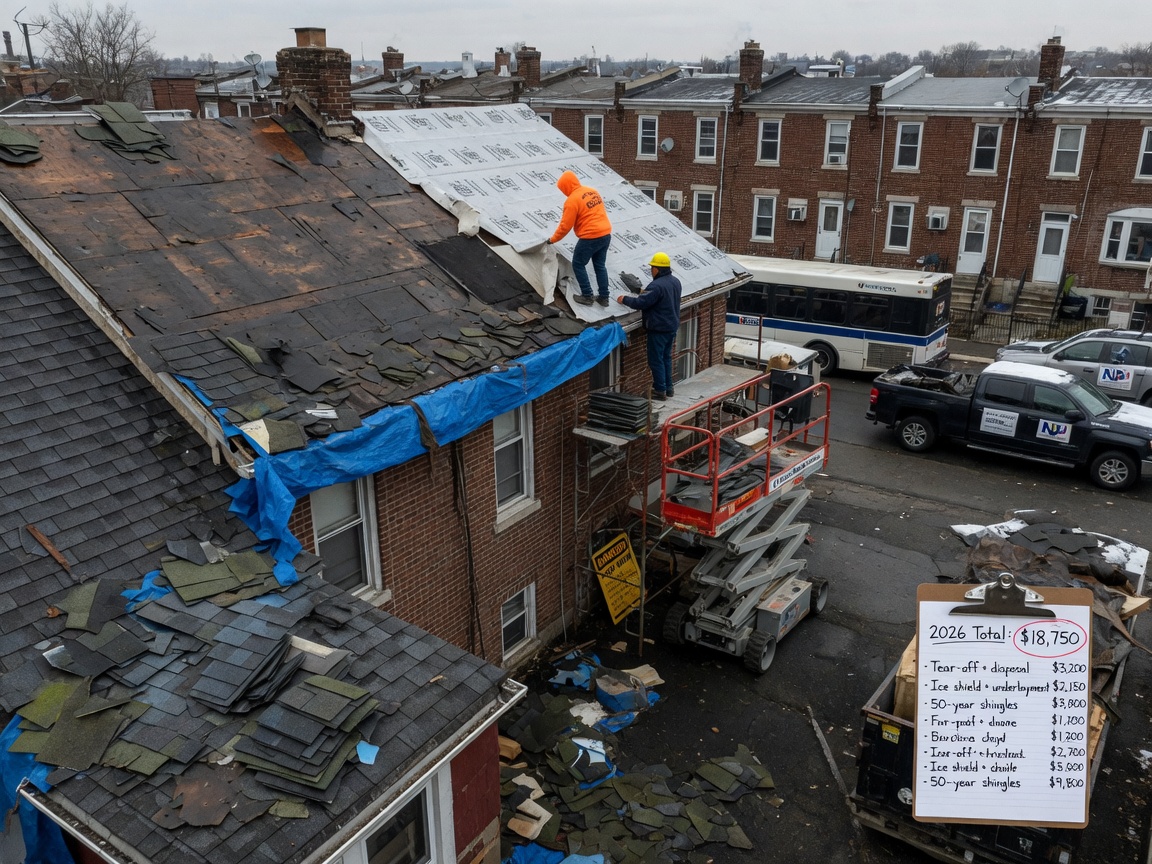
A roof replacement estimate in New Jersey rarely matches the one next door, and that is normal. Two houses on the same street can get very different numbers because the work underneath the shingles is different. This guide covers what moves the price, so you can read a written estimate and ask the roofer the right questions.
Roof Size and Pitch
Square footage is the starting point: more roof means more shingles, more underlayment and more labor. Pitch matters almost as much. A steep slope on a Cape or colonial takes longer to work, needs extra safety setup, and slows the crew down on every bundle carried up. Dormers, valleys and hips add cut pieces and flashing, so a cut-up roof costs more than a plain gable of the same size.
Layers to Tear Off
Older New Jersey housing stock, including many homes in Newark, Elizabeth and Jersey City, often has two or three layers of asphalt shingles stacked up over the years. Each extra layer adds tear-off time and disposal weight. Ask the roofer how many layers are on the roof now, and whether the estimate assumes a full tear-off or an overlay. A tear-off lets the roofer see the deck, which is usually the better way to find problems before they get covered.
Deck Condition and Sheathing Replacement
Once the old shingles are off, the plywood or plank sheathing underneath shows what years of leaks and condensation have done. Soft, stained or delaminated boards have to be replaced before new roofing goes on. This is the biggest unknown in most estimates. Ask how the estimate handles sheathing: is there an allowance, how is extra deck work measured, and how will you be told if more is needed once the roof is open?
Shingle Line and Material
Basic three-tab shingles, architectural shingles and heavier designer lines all price differently, and so do metal and slate. Thicker shingles generally handle New Jersey wind, nor'easters and freeze-thaw cycles better, and the manufacturer sets the rules for what coverage applies to each line. Ask what the contractor puts in writing about workmanship and about the shingle manufacturer's coverage, and get the exact product line named on the estimate.
Flashing and Chimney Work
Flashing is where many leaks start. Step flashing along sidewalls, counter flashing at a brick chimney, and flashing around vents and skylights all take hand work. A chimney with failing mortar or a crumbling cricket can add repair time. If the estimate just says "flashing" with no detail, ask what will be replaced and what will be reused.
Ice and Water Shield and Ventilation
Ice dams along the eaves are a regular winter problem in New Jersey, which is why self-adhering ice and water shield at the eaves and in valleys is a common line item. Attic ventilation is part of the same story: ridge vents and balanced intake at the soffits keep the roof deck drier and cooler. Drip edge belongs on the list too. Each of these adds material and labor, and each is worth seeing named on the estimate.
Permits Where the Town Requires Them
Whether a permit is needed depends on the building type and the scope of the work, and the town's construction office under the New Jersey Uniform Construction Code makes that call. A detached house, a townhouse, a rowhouse and a multi-unit building can all be treated differently. The homeowner or the roofer should check with the construction office before work starts, and ask the roofer whether any permit fee is part of the estimate or billed separately.
Access and Dumpster Placement
Tight lots, narrow driveways, rowhouses with no side yard and roofs that are several stories up all change how the job runs. A dumpster needs a spot close enough to load from the roof edge. On a city street, that can mean arranging space at the curb. Mention anything unusual about access when you talk to the roofer, since it affects how long the job takes.
How to Compare Written Estimates Line by Line
Get more than one written estimate and lay them next to each other. Check that each one lists the same items: number of layers to be removed, disposal, sheathing replacement terms, underlayment, ice and water shield, drip edge, flashing, ventilation, shingle line by name, cleanup, and permit handling. An estimate that reads shorter is often just leaving something out. If the numbers differ, ask each roofer to explain the difference rather than guessing.
Before you sign anything, check the contractor's New Jersey Home Improvement Contractor registration through the state's Division of Consumer Affairs, and ask what the contractor puts in writing about workmanship.
Where to Go Next
If you are still deciding whether the roof needs full replacement, read about roof repair, since a few missing shingles or one leaking flashing joint may not call for a whole new roof. If you already know it is time, the roof replacement page walks through how the job runs from tear-off to cleanup.
Colonial Roof Service is a referral line, not a roofing company. Call (877) 298-2340 and we connect your call with an independent local roofing contractor who can look at your roof and put an estimate in writing.