2026-10-07 ·
Roof Repair or Roof Replacement? Signs Your New Jersey Roof Is Done
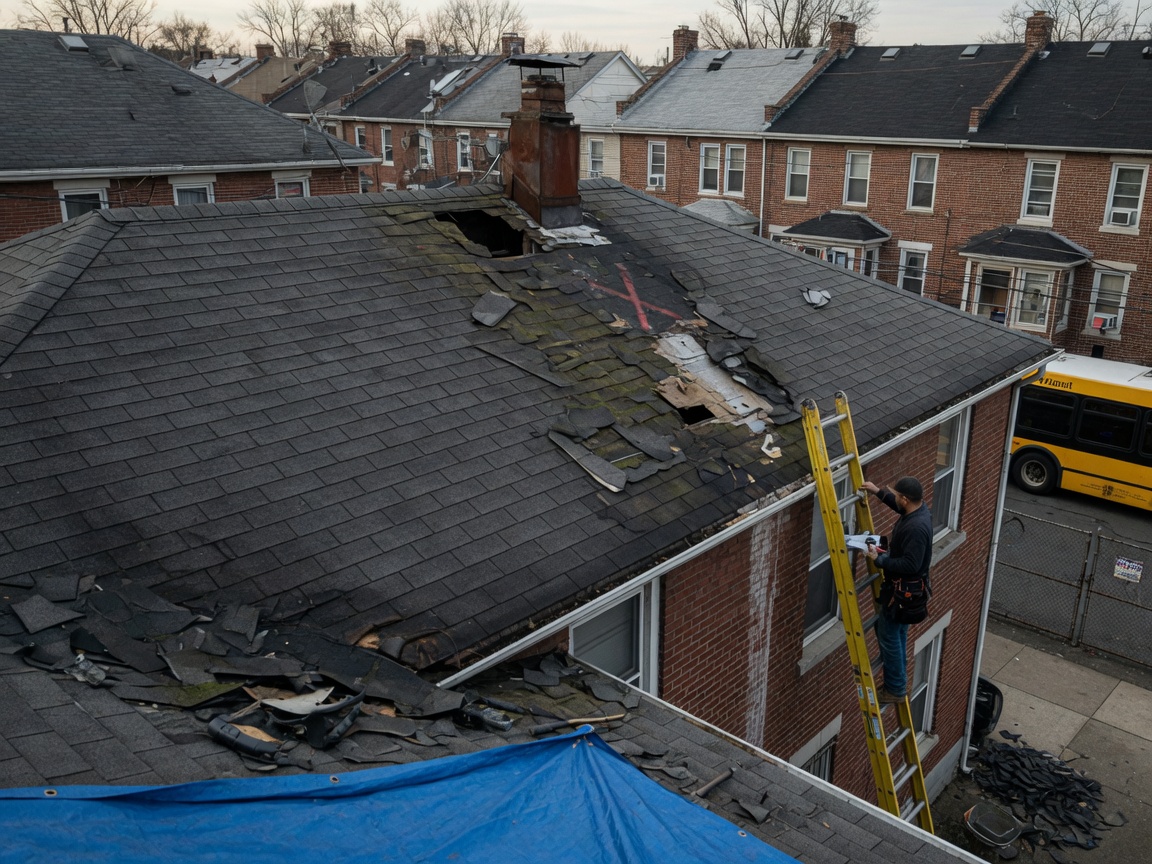
You walk into the kitchen after a nor'easter and there it is: a brown stain on the ceiling, slowly spreading, with a drip landing on the floor. The first question is always the same: can this be fixed, or do I need a new roof? The honest answer depends less on the leak you can see than on the condition of everything around it. A single failed pipe boot on a ten-year-old roof is a repair. The same leak on a roof that is curling, bare in places and already two layers thick is a sign of something bigger.
Before Anyone Comes Out
Deal with the water first, then the roof. Put a bucket under the drip and a towel under the bucket to stop splashing. Move furniture, rugs and anything valuable out of the way. If the ceiling is bulging with trapped water, poke a small hole at the lowest point so it drains into the bucket instead of coming down all at once. Take clear photos of the stain, the damaged ceiling and any shingles in the yard, with dates, because you will want them if you file an insurance claim. Stay off the roof. Wet shingles, a steep pitch and a ladder in the wind are how homeowners get hurt. If a tarp is needed, leave it to someone who knows how to place one safely.
Signs a Repair Will Still Do the Job
- The damage is in one place: a few shingles torn off in a wind storm, a cracked rubber boot around a plumbing vent, a small section of flashing pulled away from a wall.
- The rest of the shingles still lie flat, hold their granules and bend without cracking.
- The roof is one layer, and the deck feels solid underfoot.
- The house has had no other roof leaks in the last few years.
In those cases a repair is the sensible spend. See roof repair for what that involves.
Signs the Roof Is Done
- Leaks in more than one place, or leaks that come back after they have been fixed. That usually means the underlayment beneath the shingles has failed, not just the spot you can see.
- Curling, cupping or cracked shingles across large areas, especially on the south- and west-facing slopes that take the most summer sun.
- Bald patches and granules in the gutters. Granules protect the asphalt from UV; once they wash off, the shingles age quickly.
- Two or more layers already on the roof. The residential code New Jersey enforces does not allow a third layer, so any significant work means a full tear-off anyway.
- A soft or spongy deck, or daylight showing through the boards in the attic.
- Stained or damp roof sheathing in the attic, or mold on the underside of the deck, which points to long-term moisture from leaks or poor ventilation.
- Age. Asphalt shingle roofs commonly last around two decades, less with poor ventilation. If yours is in that range and showing the signs above, repairs tend to buy months, not years.
Why New Jersey Roofs Wear the Way They Do
Much of the housing in North and Central Jersey was built before 1980, and a lot of it has been re-covered at least once. Layered roofs hold heat and moisture, and they hide what is happening to the deck. Add nor'easters that drive rain sideways under the shingle edges, and winters where snow melts and refreezes at the eaves, and the weak points show up first at the valleys, the walls and the edges. Those are the places to look when you are judging how much life a roof has left.
What Drives the Cost of Each Option
Nobody can price a roof from a photo of a stain, and any number quoted over the phone is a guess. What matters is what goes into the job, and the two options are driven by different things.
For a repair, the main factors are access (a low garage roof is a different job from a third-story slope), how much flashing or decking is involved, and whether the shingles can be matched on an older roof. Shingle lines get discontinued and colors fade, so a few new tabs on a weathered roof can stand out. A repair that stops at replacing a pipe boot is small. One that opens up rotted sheathing around a chimney is not.
For a replacement, the factors are the size of the roof, its pitch, how many layers have to be torn off, the condition of the deck, the shingle line you choose, flashing and chimney work, and permits where they apply. Each one is explained in more detail in our guide to what New Jersey homeowners pay for a roof replacement.
There is one piece of logic worth holding onto. If repair after repair keeps stacking up on a roof that is already near the end of its life, that usually points to roof replacement. You end up paying to chase leaks across a roof whose underlayment and shingles are failing everywhere, not just where the water showed up.
Permits
Repairing or replacing the roof covering on a detached one- or two-family house is ordinary maintenance under New Jersey's Uniform Construction Code (N.J.A.C. 5:23-2.7), so most homeowners do not need a permit for either option. Attached homes, buildings with three or more units, structural repairs and some historic districts are the exceptions, so check with your municipal construction office if that describes your house.
Getting a Straight Answer
Ask any roofer you call to show you photos of what they found, on the roof and in the attic, and to explain why they are recommending repair or replacement. Ask for a written recommendation too, so you can compare it with a second opinion. If the photos show isolated damage on a sound roof, you should be hearing about a repair. If the photos show failing shingles, repeated leaks and a damp deck, you should be hearing about replacement, and why.
Call (877) 298-2340 and we connect your call with a local roofing contractor. If your gutters are also overflowing or pulling away from the fascia, ask about gutter installation at the same visit.