A water stain spreading across an upstairs ceiling after a nor'easter, shingles curled on the south-facing slope, granules piling up in the gutters, or a home inspector's note that the roof has two or more layers: these are the usual reasons homeowners start looking into roof replacement in New Jersey. Split-levels, Cape Cods and older colonials across Essex, Union and Middlesex counties often carry decades of re-covers, and every extra layer traps moisture against the deck. If water is coming in right now, put a bucket under the drip, move valuables, photograph the damage for your insurance claim and stay off the roof.
Colonial Roof Service is a phone line, not a roofing crew. When you call (877) 298-2340, we connect your call with an independent local roofing contractor, and the roofer you speak with does the inspection, the estimate and the work. A proper replacement means stripping everything back to the wood, checking the sheathing, and rebuilding the roof as a complete system rather than adding another layer on top. If you are not sure the roof is past saving, read about roof repair first, since a few damaged areas can sometimes be fixed without replacing everything.
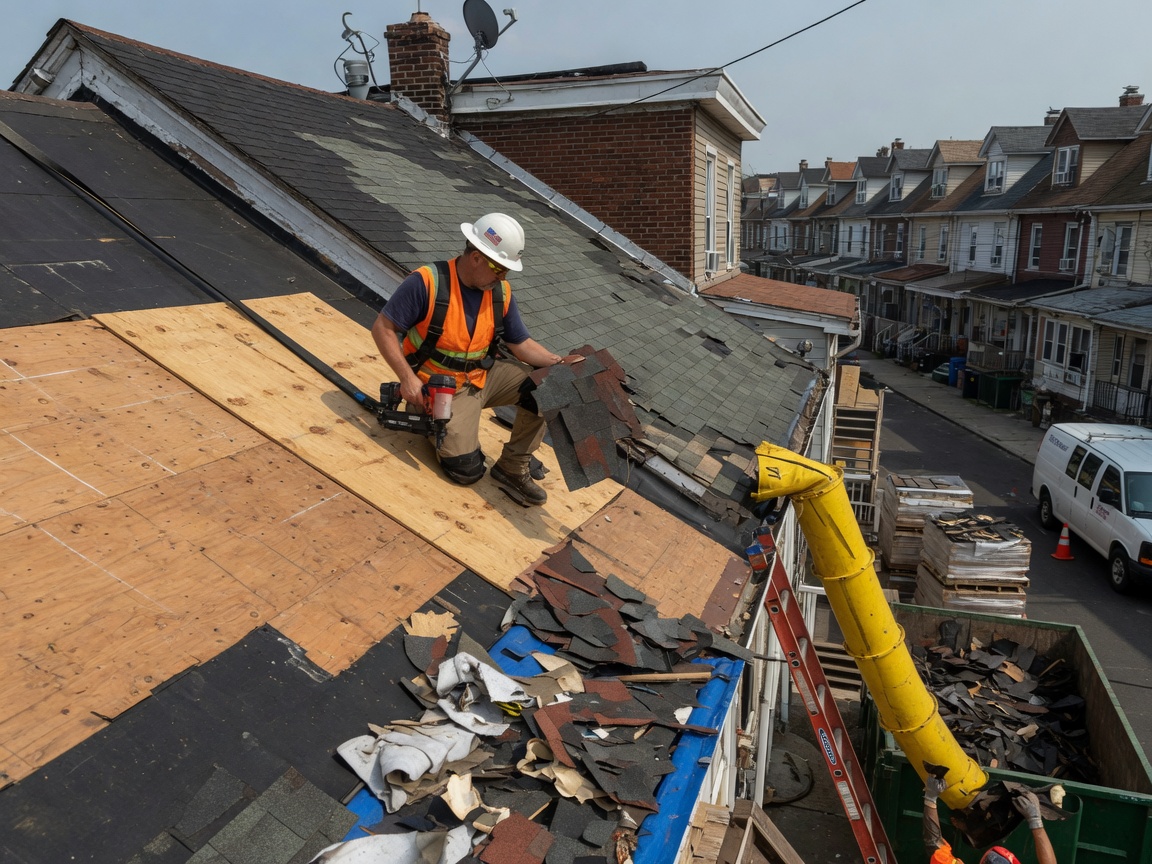
Two or more layers of shingles generally means a full tear-off, because a new layer cannot go over a roof that already carries that many. That is no bad thing. Once the deck is exposed, the roofer can replace soft or delaminated plywood, install ice and water shield at the eaves and valleys, lay synthetic underlayment across the field, and add new drip edge and step and counter flashing at walls and chimneys. Those details are what keep freeze-thaw cycles, ice dams and wind-driven rain from finding their way under the shingles in February.
Ventilation is the part of a roof replacement that gets skipped most often. Humid summers and cold winters both punish an attic that cannot breathe: shingles bake from below in July, and warm attic air melts snow that refreezes at the eaves in January. Ask the roofer how the new roof will balance soffit intake with ridge exhaust. If your gutters are undersized or pulling away from the fascia, it can make sense to deal with them during the same project so the drip edge and gutter line up. Our page on gutter installation covers sizing and downspout placement.
Do You Need a Permit?
Whether a roof replacement needs a permit depends on the type of building and the scope of the work. Your town's construction office makes that call under the New Jersey Uniform Construction Code. A detached house, a townhouse, a rowhouse and a building with several units can all be treated differently, and so can work that changes the roof structure. Check with the construction office before work starts, or ask the roofer to do it and tell you what they found.
What Drives Roof Replacement Cost in NJ
No two roofs price out the same, and the roofer you are connected with sets the price after looking at your roof. The main things that move it are roof size and pitch, how many layers have to come off, how much of the decking turns out to be soft or delaminated, the shingle line you choose (architectural versus designer), ventilation and flashing work, chimney details, any permit, and access for the dumpster and trucks. Ask the roofer for a written estimate that breaks these items out so you can compare quotes line by line. Also ask what the contractor puts in writing about workmanship and the shingle manufacturer's coverage, and check that they hold a New Jersey Home Improvement Contractor registration.
Ready to talk it through? Call (877) 298-2340 and we will connect you with a local roofing contractor.
Technician insight
On older Essex and Union County colonials, the surprise is rarely the shingles. It is finding two or three layers underneath and soft decking along the rear valley. Ask any roofer to include a decking allowance in the estimate, so the number does not change halfway through the job.
A Common Situation: Split-Level After a Nor'easter
A common situation goes like this. Water stains show up in the upstairs ceilings after a nor'easter. When a roofer gets up there, they find three layers of shingles and soft decking along the rear valley. All three layers have to come off, the damaged sheathing is replaced, and ice and water shield, new underlayment and ridge ventilation go down before the architectural shingles. The homeowner ends up with a single-layer roof that sheds water the way it should.
Roof Replacement Services We Offer
✓Asphalt Shingle Roof Replacement
Architectural asphalt shingles over new underlayment and ice and water shield. Ask the roofer which shingle line suits New Jersey wind exposure.
✓Full Tear-Off Replacement
Every existing layer removed down to the deck, which is generally needed when a roof already carries two or more layers.
✓Roof Deck Replacement
Soft, rotted or delaminated plywood replaced before the new roof goes on, so the shingles sit on a solid nailing base.
✓Architectural Shingle Upgrades
Moving from worn three-tab shingles to thicker dimensional shingles that handle wind and hold their color longer.
✓Storm-Damage Roof Replacement
Replacement when wind or fallen limbs have damaged too much of the roof for a patch to hold.
✓Attic Ventilation Upgrade
Balanced soffit intake and ridge exhaust added during replacement to cut summer heat and winter moisture in the attic.
How it works
- 1
Call and Get Connected
Call (877) 298-2340, tell us what you are seeing, and we connect your call with a local roofing contractor.
- 2
The Contractor's Roof Inspection
The roofer looks at the shingles, counts layers, checks flashing and the attic, and can photograph what they find. Ask whether there is a charge before they come out.
- 3
Written Estimate
Ask the roofer for an itemized estimate covering tear-off, a decking allowance, shingle line, ventilation and any gutter work.
- 4
Scheduling and Permit Check
The roofer books the job around the forecast. Check with your town's construction office, or ask the roofer to, about whether a permit is needed.
- 5
Tear-Off and Installation
Old layers come off, the deck is repaired, then ice and water shield, underlayment, drip edge, flashing, shingles and ridge vent go on.
- 6
Final Walk-Through
Ask the roofer to walk the finished roof with you, sweep the yard with a magnet for nails and haul away all debris.
Pricing
Roof size and pitch, the number of layers to tear off, deck condition, shingle line, flashing and chimney work, permits and access all drive what a roof replacement costs, and the roofer sets the price after seeing your roof.