Westfield roofs are bigger and steeper than most. The town's population doubled in the two decades after it incorporated in 1903, and the 1920s were its biggest building boom. Much of what went up then is still standing: Colonial Revival and Shingle Style houses, Craftsman bungalows and foursquares, and Tudors with high-pitched gables and cross gables in neighborhoods like Wychwood and Westfield Gardens. Those are the roofs roofers in Westfield, NJ spend much of their time replacing, which means steep-slope safety setups and plenty of valleys and dormers to flash properly.
The trees are the other half of the story. Mature shade trees line many Westfield streets, which keeps roofs cooler but also keeps them damp, drops limbs in storms, and fills gutters every fall. Shaded slopes tend to grow moss and wear out sooner than the sunny side. When a roof here is replaced, the roofer should look closely at overhanging limbs and at whether the existing gutters and downspouts can handle the water coming off a large, steep roof. Westfield also has a tree preservation ordinance, so check with the town before removing a big tree.
After a storm, the first sign is usually small. A brown water stain spreading across a bedroom ceiling. Shingles or a split limb lying in the yard. Dark granules in the gutter, or a gutter run pulling off the fascia where a branch landed. In freeze-thaw weather, ice dams can build along the eaves. Start with the safe steps. Put a bucket under the drip, move furniture and valuables out of the way, and photograph the damage inside and out for your insurance claim. Stay off a steep roof. A tarp goes up only if someone who knows how can set it from a ladder. A small leak may only need a roof repair, and the roofer will say when it needs more.
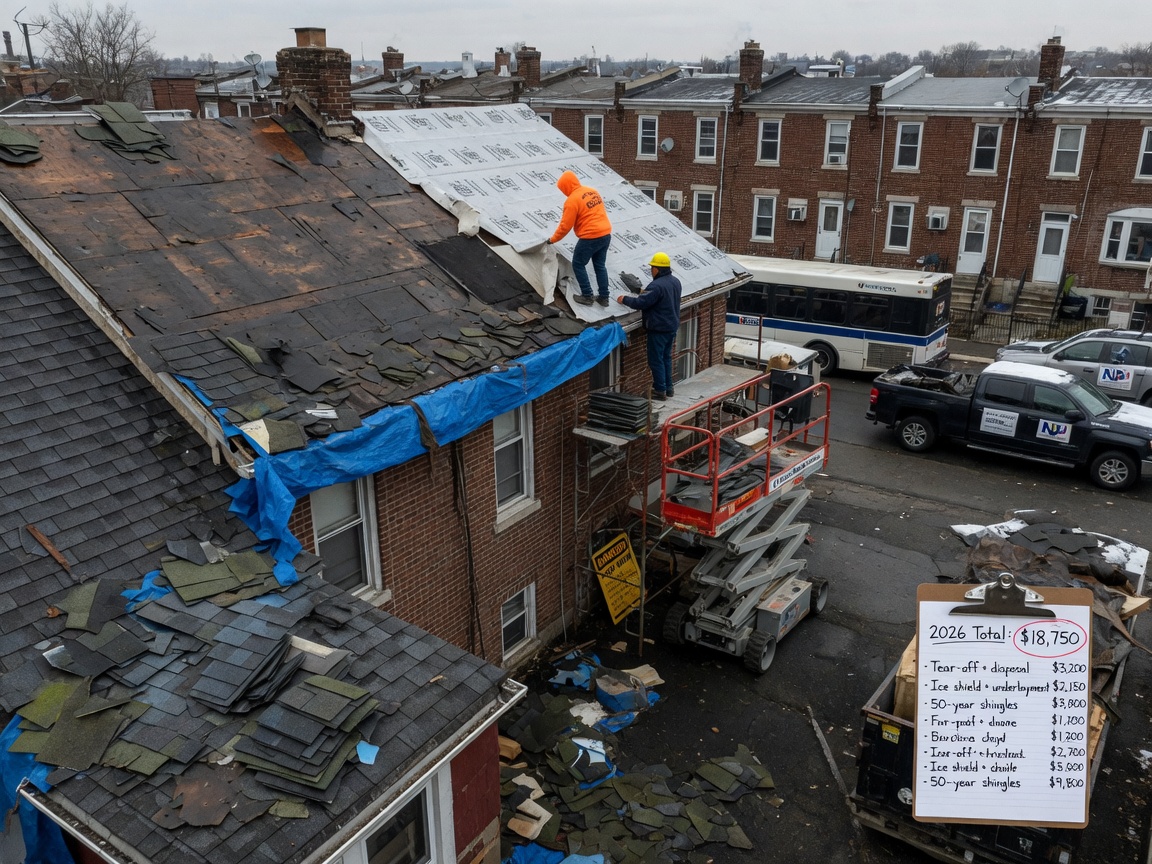
When repairs will not hold, a roof replacement follows a set order. The old shingles come off down to the deck, and the roofer checks the boards and replaces any sheathing that has gone soft from leaks. Ice and water shield goes along the eaves and in the valleys, with drip edge at the edges, then underlayment and shingles. Where the roof meets a wall, dormer or chimney, step and counter flashing keeps water from running behind it. Ridge vents and attic ventilation get checked too, because a hot, damp attic wears a roof out from below. Cost follows roof size and pitch, how many layers come off, deck condition, material, and flashing and chimney work.
After World War II the rest of town filled in with colonials, Cape Cods and ranches, and most of these houses have been re-roofed at least once. Where two layers are already on, the International Residential Code as enforced in New Jersey won't allow a third, so a full tear-off is standard across this part of Union County. If your gutters are the bigger headache right now, the gutter guards page covers how guards work under heavy leaf fall. Call (877) 298-2340 and we connect your call to a local roofing contractor who can look at your roof.
Around Westfield
We regularly work near:
- 📍Mindowaskin Park
- 📍Westfield Memorial Library
- 📍Echo Lake Country Club
- 📍Downtown Westfield
Roofing Company in Westfield Local Notes
- •Steep pitches on colonials and Tudors mean roof jacks, harnesses and more labor per square than a low ranch roof, and that should show up in any written estimate.
- •Under big trees, larger gutters and downspouts are often worth it. A 6-inch gutter carries noticeably more water than the common 5-inch.
- •Replacing the roof covering on a detached one- or two-family house is ordinary maintenance and needs no construction permit. Structural work goes through the Town of Westfield Building Department.
- •The Kimball Avenue Historic District and individually designated landmarks fall under Westfield's Historic Preservation Commission. If your house is one of them, check with the town before changing roofing materials.