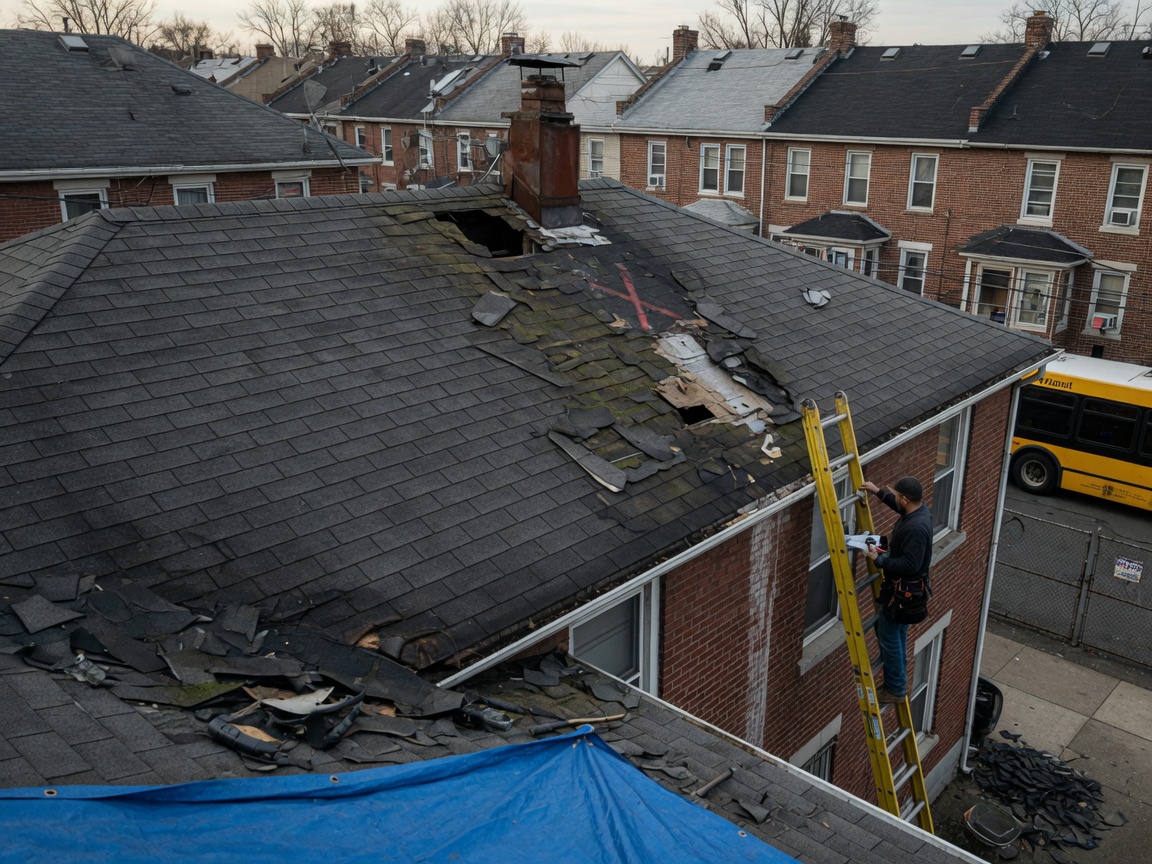
About 39 percent of Summit's homes were built before 1940, and roughly three-quarters before 1970. The North Side alone, the largest of the city's historic districts, is full of houses from the 1890s through the 1940s: Queen Anne, Shingle Style and Colonial Revival, plus more than a hundred Tudor Revivals, many on sloped, heavily treed lots. As roofers in Summit, NJ, most of our work here is roof replacement on those steep, complicated roofs, plus the gutters that have to handle everything the trees drop on them.
Those houses are rarely simple. Cross gables, dormers and long valleys all have to be flashed right, and steep pitches mean more safety setup before the first shingle comes off. Sloped driveways make dumpster placement and material delivery harder than on flat ground. None of that is unusual for Summit, but it's why two estimates for the same house can look very different: one accounts for the detail work and one doesn't.
Most older roofs in town have been replaced at least once. Where there are already two layers, the International Residential Code as enforced in New Jersey won't allow another, so it's a full tear-off. Summit is a city within Union County, and anything that does need review goes to its own Department of Community Services at City Hall. Under this much tree cover the gutters work hard too; our gutter guards page covers what guards do and don't solve.
Around Summit
We regularly work near:
- 📍Summit Train Station
- 📍Summit Public Library
- 📍Summit Area YMCA
- 📍Reeves-Reed Arboretum
- 📍Overlook Medical Center
Roofing Company in Summit — Local Notes
- •Some older Summit homes still have slate or clay tile. That's specialist work; our core is asphalt shingle roof replacement on pitched roofs.
- •Sandy in 2012 was mainly a wind event here: city crews removed more than 225 trees from streets, and dozens of homes were damaged, many by falling trees.
- •Removing a private tree 12 inches or more in diameter needs a city tree permit, so plan trimming or removal near the house ahead of a roof job.
- •Replacing the roof covering on a detached one- or two-family house needs no construction permit. Structural work goes through the Construction Division of the Department of Community Services.